Interoperable Tools and Governance for Disaster Risk Management
DIRECTED’s federated data infrastructure will enable the planning, assessment and communication of Climate Change Adaptation and Disaster Risk Reduction measures.
The recent droughts and unprecedented floods in central Europe have disclosed our vulnerability to extreme weather events. Not only does climate change drive more frequent and intensifying weather extremes, demographic change and socio-economic development also exacerbate severe impacts. International frameworks for disaster risk reduction and climate change adaptation (e.g., the SENDAI framework, the EU Strategy on adaptation to climate change) acknowledge the critical need for integrating risk governance, communication and operational mechanisms to cope with extreme climate events throughout the entire disaster risk management cycle. DIRECTED aspires to foster disaster-resilient European societies by expanding the capabilities to
- utilize, communicate and exchange state-of-the art data, information and knowledge between different actors;
- boost the integration, accessibility and interoperability of models;
- improve dialog and cooperation between actors involved at all levels based on enhanced community engagement and
- develop new governance and risk management strategies using a bottom-up, value-driven co-development approach.
Central to DIRECTED are four Real World Labs (RWL). They are located in European areas that have been affected by severe weather events in the recent past or have a high probability to be affected in the near future. These Real World Labs co-develop new governance, interoperability and knowledge co-production frameworks as well as demonstrate their benefits for enhanced disaster risk management. The Real World Labs ensure that the project continuously and actively involves key stakeholders in the co-development process and addresses topical problems of multi-hazard risk management and climate-change adaptation. Key to supporting the interoperability of information is the development of an innovative federated cloud platform that enables secure and flexible access, transformation, combination and sharing of models and data. Tailored to the needs of the Real World Labs, the platform is based on a federated architecture that meets particular requirements regarding the handling of sensitive data and models. 52°North leads the architecture design development, as well as the platform implementation and evaluation throughout the project.
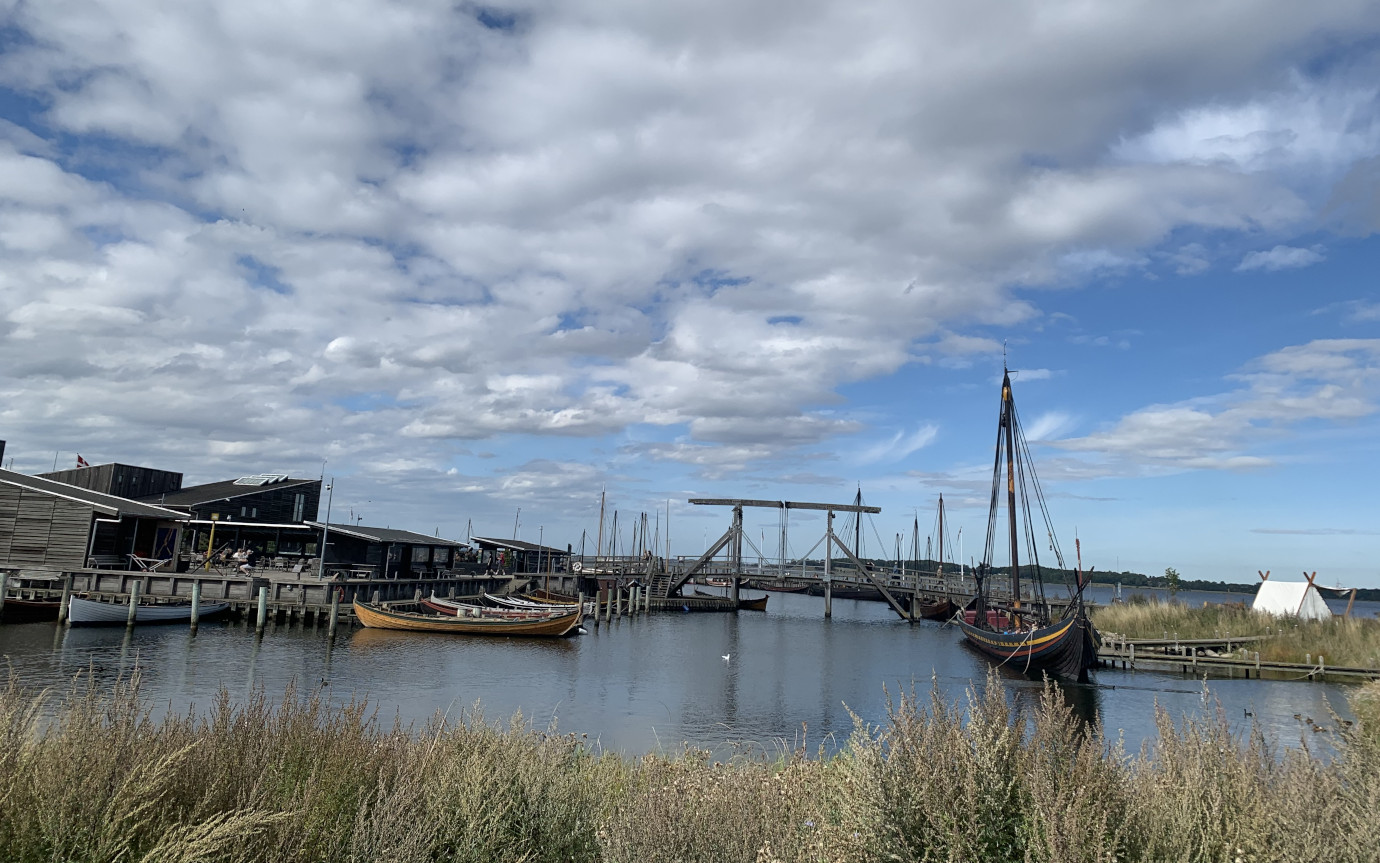
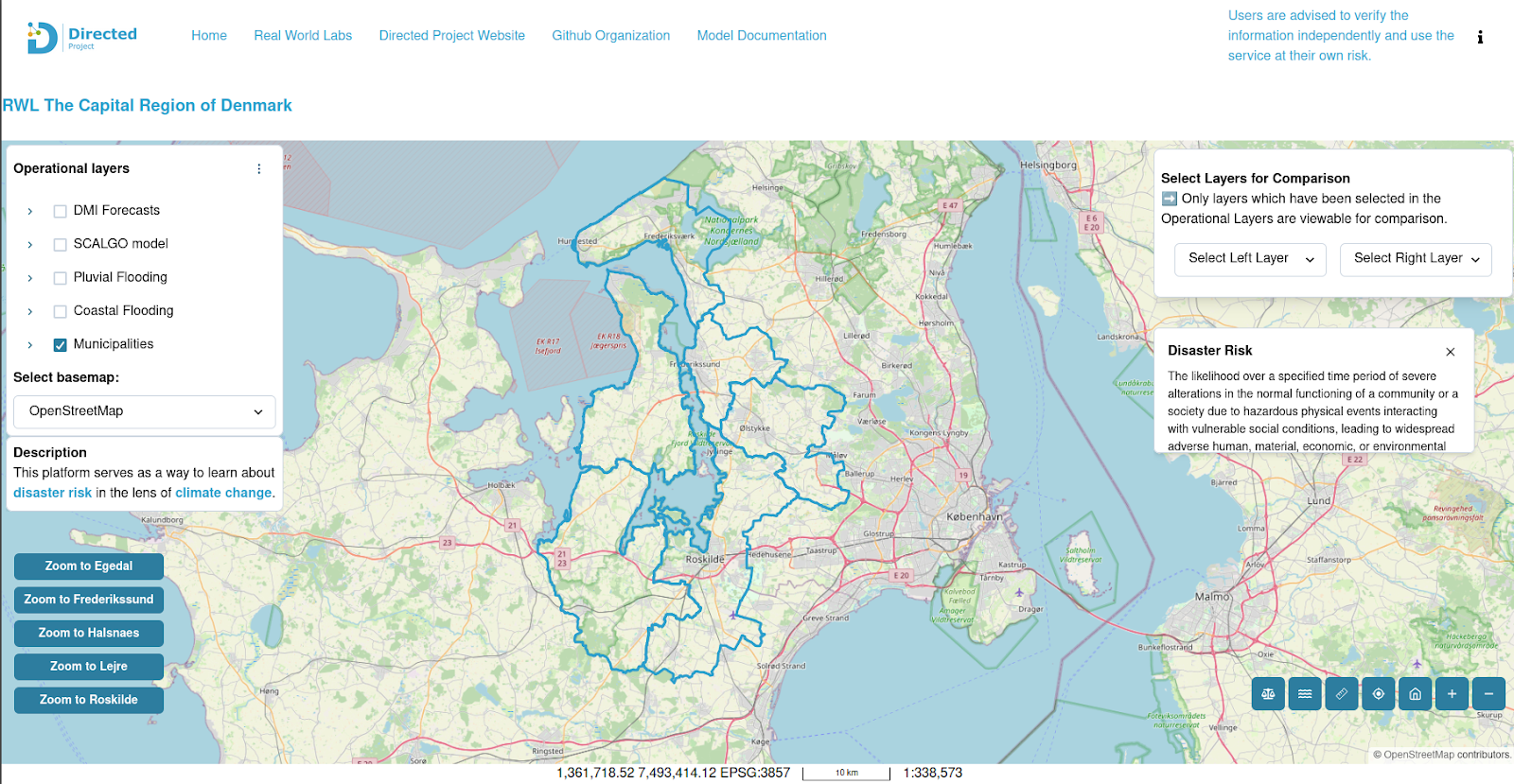
In 2025, 52°North implemented and deployed the Data Fabric prototype, building on the previously collected requirements and defined architecture. The implementation took place in close collaboration with RWL hosts and stakeholders. Regular task force meetings with RWL hosts and representatives from each work package steered the agile development and made sure that the specific needs of the RWLs were considered. During workshops with the stakeholders, which were hold partially face-to-face and partially online, our team demonstrated the Data Fabric and jointly refined the requirements. The partners from the Capital Region of Denmark RWL hosted the General Assembly in Copenhagen where local stakeholders, e.g. from the Danish Meteorological Institute (DMI) and the Danish Emergency Management Agency (DEMA), gave deep insights into their daily work. Moreover, we learned about the challenges posed by extreme weather events during a field trip in the Roskilde Fjord. We met with stakeholders on site and examined how technical developments might help municipalities along the Fjord with their climate change adaptation plans to create a more cohesive, informed and safer future. In the last year of the project, our team will improve and refine the Data Fabric and intensify the work on user training.

Partners
Coordinator, Technische Universität Braunschweig (TUBS), Germany
Potsdam Institut für Klimafolgenforschung (PIK), Germany
Danmarks Tekniske Universitet (DTU), Denmark
GECOsistema SRL (GECO), Italy
Research Institute for Sustainability – Helmholtz Centre Potsdam (RIFS), Germany
University College Cork (UCC), Ireland
Region Hovedstaden, Denmark
Agenzia Regionale per la Sicurezza Territoriale e la Protezione (ARSTPC-ER), Italy
GENILLARD & CO, Germany
International Intitute for Applied Systems Analysis (IIASA), Austria
Erftverband, Germany
Zala Special Rescue Team (ZSRT), Hungary
Agenzia regionale per la prevenzione, l’ambiente e l’energia dell’Emilia-Romagna (ARPAE), Italy
Helmholtz-Zentrum Potsdam Deutsches GeoForschungsZentrum (GFZ), Germany
Oasis Hub Ltd., United Kingdom
Stockholm Environment Institute (SEI), United Kingdom