Effective disaster risk management and climate adaptation depend on the ability to access, connect and use data across organizations, sectors and borders. Yet critical information is often fragmented across different systems, formats and institutions, limiting its value for decision-makers and practitioners.
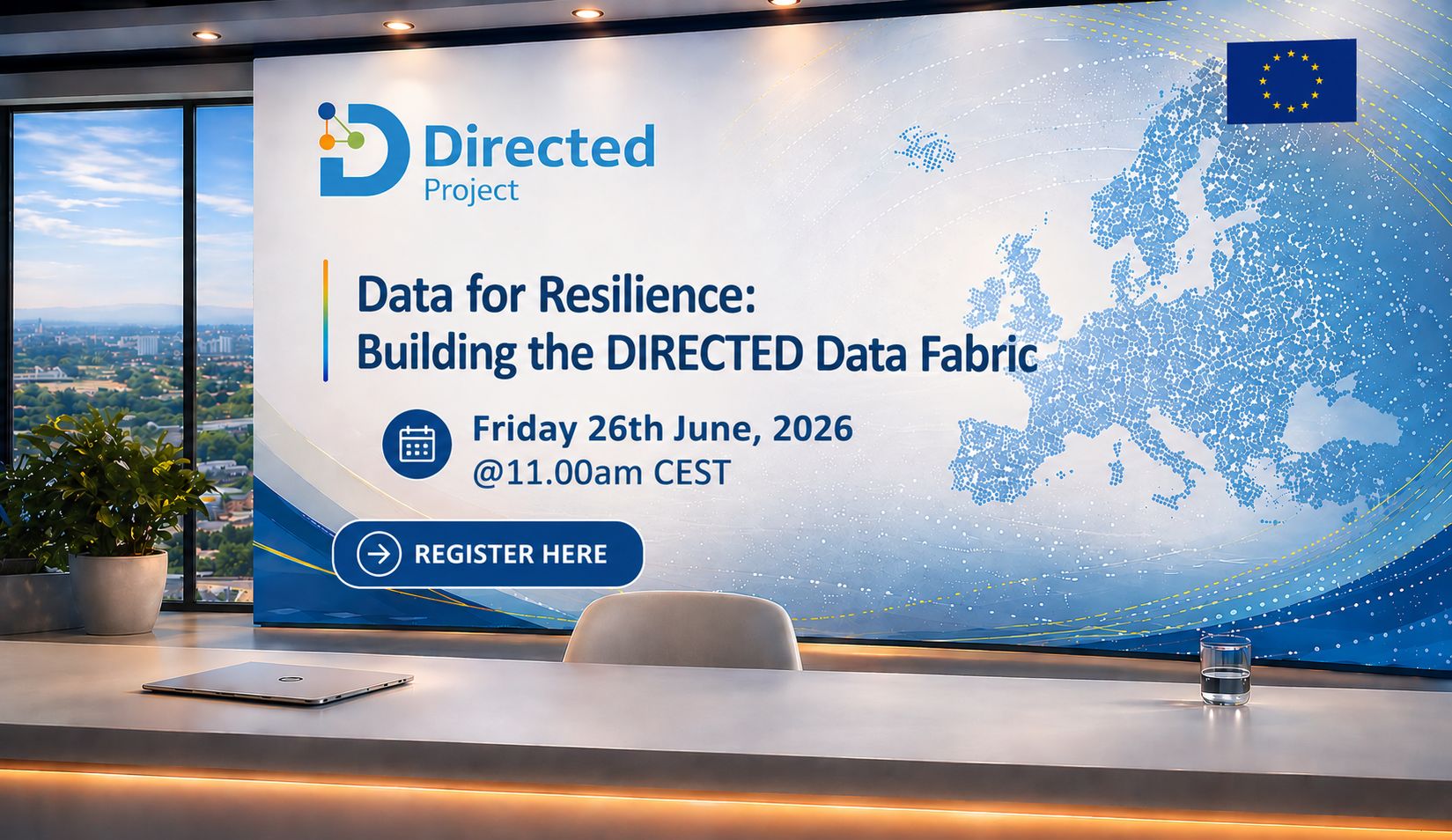
This webinar will showcase the DIRECTED Data Fabric, an award-winning interoperability innovation developed through the Horizon Europe DIRECTED project. Co-developed with stakeholders across DIRECTED’s Real World Labs, the Data Fabric enables data, models and decision-support tools to work together more effectively, helping organizations overcome data silos and support more informed decision-making in complex risk environments.
Experts from 52°North and SaferPlaces will present how interoperability standards, shared architectures and connected services are being used to link data and modelling systems across Europe. The session will demonstrate how the Data Fabric supports the exchange and integration of information between different organizations and systems while remaining flexible enough to meet diverse operational and governance needs.
A particular focus will be placed on how the Data Fabric has been shaped through collaboration with end users. Drawing on experiences from DIRECTED’s Real World Labs, speakers will present practical examples of interoperability challenges and solutions in different contexts. These include collaboration across municipal boundaries in the Capital Region of Denmark, as well as cross-sectoral cooperation involving civil protection agencies, scientists, infrastructure operators, policymakers and local authorities in other regional settings. These real-world experiences have helped ensure that the Data Fabric is grounded in operational requirements and user needs.
The webinar will also explore how interoperable data infrastructures can support risk assessment, preparedness, response and recovery, and how organizations can begin adopting interoperability approaches within their own decision-making and operational environments. It will be of particular interest to technical agencies, open data communities, researchers, SMEs, local authorities and practitioners seeking practical approaches to improving data sharing, collaboration and evidence-based decision-making for resilience.
By the end of this webinar participants will:
- Understand why interoperability is critical for climate change adaptation and disaster risk management.
- Learn how the DIRECTED Data Fabric connects data, models and services across organisational, sectoral and geographical boundaries.
- Explore how interoperability standards and shared architectures support data sharing and collaboration.
- Discover how co-development with stakeholders through DIRECTED’s Real World Labs has shaped the Data Fabric’s design and implementation.
- Examine practical examples of cross-municipal and cross-sectoral interoperability challenges and solutions.
- Identify opportunities to apply Data Fabric principles and approaches within their own organisations and initiatives.
- Gain insights into how connected data ecosystems can support more effective risk assessment, preparedness, response and resilience-building.
Register now! https://tinyurl.com/webinar-datafabric